
Most of us love to watch spy movies, whether it's James Bond or current TV series that show us how secret agents infiltrate enemy territory today. Agents who operated during the Second World War worked under very dangerous circumstances, risking their lives so that we could defeat our enemies and offer future generations a life of freedom from tyranny. Here we take a look at some of the secret agents who took on dangerous missions behind enemy lines during WWII.
The White Rabbit
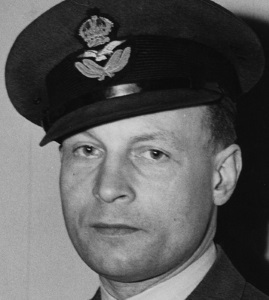
Edward Yeo-Thomas, known as the White Rabbit, was born in London on 17th June 1902 and worked as a dispatch rider in World War I and a secret agent in World War II. Thomas was even captured by the Red Army in 1919 and was due to be executed when he escaped by strangling a prison guard.
In 1939 Thomas joined the RAF as an intelligence officer, and in 1942 was recruited by the French arm of the SOE where he became a military planner. In 1943 Thomas parachuted into France in order to assist in an operation to unify the French Resistance groups. After Thomas had returned to London, many prominent resistance figures were captured by the Gestapo and executed.
Thomas returned to France in September 1943, once again to organise the French Resistance groups. On hearing that his friend Pierre Brossolette had been captured, he was determined to help Pierre escape, but instead, while trying to attempt a rescue, Thomas was caught and Pierre committed suicide following hours of torture.
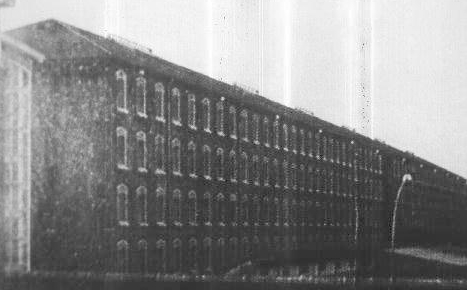
Thomas endured many hours of torture himself at the hands of the Gestapo in Fresnes Prison but never capitulated. He was eventually sent to Buchenwald Concentration Camp but escaped execution by swapping identities with a man who had previously died from typhus. Thomas later escaped and met allied troops as they were advancing into France.
Thomas gave evidence against Buchenwald staff, with around twenty two of them being hanged as a result. Thomas won the George Cross and the Military Cross. He died on 26th February 1964 at the age of sixty two. A blue plaque was placed outside his London home in 2010.
Agent Blanche
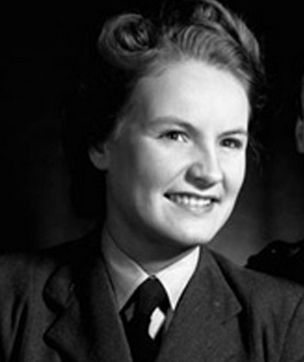
Sonya Butt, or Agent Blanche as she was known, was born on the 14th May 1924 and joined the WAAF as soon as she became old enough at seventeen. Sonya spoke fluent French and was soon recruited by the SOE at the tender age of nineteen. Within six months of her recruitment Sonya was working on operations behind enemy lines.
In 1944 Sonya parachuted into the Le Mans area of France nine days before D-Day under the code name Blanche. Sonya even took on the job of weapons instructor when her colleague was killed while parachuting in. Nothing was too difficult or too much trouble for Agent Blanche.
Sonya's brief was to courier messages, carry money and keep communications open between SOE agents and other operatives in the area. This kind of work took great courage, as a courier could be stopped at any moment and questioned by the enemy. Indeed this did happen to Sonya, who withstood the questioning and was sent on her way.
Sonya recruited many new agents during her time behind enemy lines, was an explosives expert and was responsible for blowing up bridges during her courier missions - all this at the age of twenty. After the war Sonya was recognised for her work by being awarded the MBE and was mentioned in dispatches for her bravery. Sonya soon married a man named Major Guy d'Artois, who was himself a war hero of the French Canadian Army.
Garbo: Double Agent
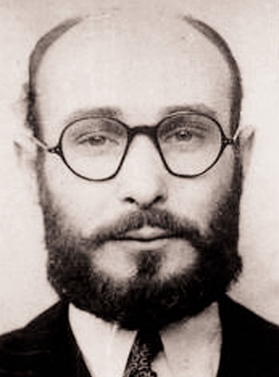
Juan Pujol, known as Garbo, was born in Barcelona in 1912, fought in the Spanish Civil War and loathed Nazism. He decided to join Britain in its fight against the Nazis as he admired the way they stood up to Hitler when other countries had capitulated. The British, however, were not easily persuaded by Pujol that they should take him on.
Garbo did not give up on his mission, and is credited with deceiving the German High Command in 1941 into believing that he wished to go to London to spy on the British for them. The Germans soon decided to take Pujol on and trained him in the art of espionage, instructing him to establish himself in England and recruit other operatives.
Pujol created many fictitious documents and lists of agents that didn't actually exist in order to fool the Germans into thinking that he was establishing himself in London, when in fact he had travelled to Lisbon. In April 1942 Pujol at last came to the attention of MI6 and was set to work with an agent named Tomas Harris.
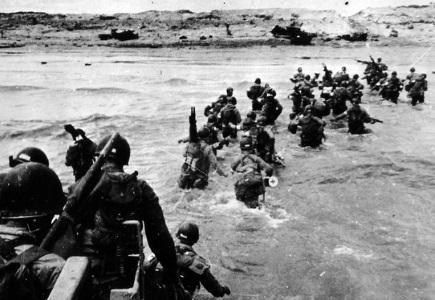
The pair created hundreds of bogus documents and agents, reeling the Germans into thinking they had a real network of spies based in London, while false information was constantly fed through to the enemy. By 1944 the allies were planning their D-Day assault landing, something the Germans were anticipating but not in the area the allies intended.
Garbo fed the Germans fake information regarding Operation Overlord, with specific details about a fictitious plan named Operation Fortitude being the main deception. Garbo told the Germans that the allies were planning to land in Pays de Calais, not Normandy, and the Germans happily took in the information hook, line and sinker. Pujol was awarded the MBE after the war, and died in 1988 in Caracas.
The White Mouse
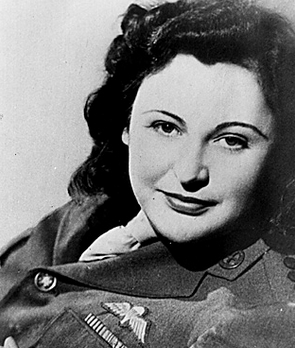
Nancy Wake, or The White Mouse as the Germans called her, was another very beautiful spy who parachuted behind enemy lines into France during her time as an agent of the SOE. Born on 30th August 1912 in Wellington, New Zealand, Nancy's family moved to Australia in 1914, where she lived until at the age of sixteen she ran away from home and travelled to New York and then London, where she trained to become a journalist.
Working in Paris as a European correspondent, Nancy saw many acts of violence committed against Jewish people as the rise of the Nazis was taking effect. Nancy married Henri Fiocca in 1939 and was based in Marseille as the Germans invaded France. Nancy joined the French Resistance as a courier, and her life was constantly in danger.
In 1943 Nancy had a price on her head, with a reward of five million francs offered by the Germans for her capture. When the network Nancy was connected to was betrayed, she quit Marseille, leaving her husband behind. Consequently Henri was arrested, tortured and executed by the Gestapo. Nancy was unaware of her husband's execution, and after six attempts she managed to travel to London where she joined the SOE.
Nancy became a revered agent credited with many talents, and in April 1944 she was parachuted into the Auvergne in order to liaise between London and the local resistance groups. Nancy distributed arms and led attacks on German installations in the area. She was so fearless and quite ruthless that she even volunteered to kill a female German spy that the men in the group wouldn't deal with. Medals awarded to Nancy after the war included:
- The George Medal
- The US Medal of Freedom
- Medaille de la Resistance
- Croix de Guerre
- Legion of Honour
- Companion of the Order of Australia
Nancy died in August 2011 aged ninety eight. She was one of the most decorated female agents of World War II.
Virginia Hall
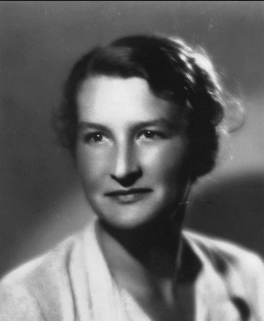
Virginia Hall, or Camille as she was often known, worked as an agent for the SOE during World War II even though she was disabled, having only one foot. Virginia was wanted by the Gestapo and was considered one of the most dangerous agents by them. She lost her lower leg in 1933 from injuries received in a hunting accident, and wore a prosthetic leg which was pretty primitive by today's standards.
Born in Baltimore, America, in 1906, Virginia could speak both French and German fluently and was therefore considered an important recruit for the SOE. Virginia began work originally in 1940 as a French ambulance driver and fled to England once the Germans invaded France. Following her training with the SOE, Virginia travelled to Vichy France disguised as an American reporter.
Virginia wrote articles for the New York Post while at the same time she helped to organise the French Resistance, assisted in the escape of downed airmen, conducted guerrilla warfare and committed sabotage, while acting as a courier for other agents and helping with supplies.
By 1942 Virginia was on the most-wanted list of spies being sought by the Germans and was described as "the woman with a limp" who was dangerous and had to be destroyed. Virginia had to flee France and made her escape by walking across the Pyrenees to Spain. Virginia then joined the American OSS, or Office of Strategic Services, and once again parachuted into France - it was said with her false leg in her backpack.
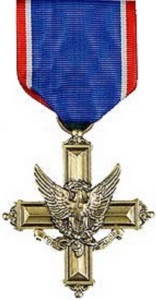
Disguised as an old woman working on a farm, Virginia resumed her work as usual. Even though dead-or-alive posters were placed all over the area, Virginia managed to keep her freedom, evading the Germans at every point. Once the war was over Virginia carried on agent work in the newly formed CIA. She was awarded the Distinguished Service Cross by the US and an MBE by the British. She died in July 1982 aged eighty six.
Hannie Schaft
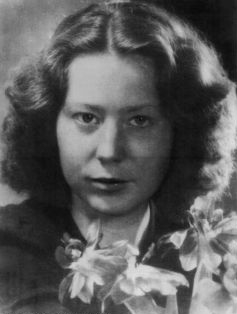
Jannetje Johanna Schaft, known as Hannie, was born on 16th September 1920 in Haarlem, Holland, and was a Dutch communist resistance fighter during World War II. Recognised for her flame-red hair, Hannie became the subject of both a book and a film due to her amazing work hiding those who were sought by the Germans and providing them with stolen identity cards and food coupons.
When war broke out she joined the resistance movement, carrying out planned attacks on collaborators and traitors, and made it her way to learn how to speak German fluently. Hannie fought tirelessly within her resistance movement to undermine the German invaders even though at the time she was a young girl.
Hannie was involved in many minor acts of resistance, then moved on to bigger acts such as stealing weapons from German soldiers, while her bravery was on display for all when she refused to sign a declaration of loyalty that all students were required to sign. Hannie returned to Haarlem and in 1943 joined the communist resistance group.
Hannie gathered information for the allies, helped fugitives and distributed underground leaflets opposing the Dutch occupation. Hannie was not afraid to get involved in very dangerous activities that mainly men engaged in, such as weapons transportation and acts of sabotage.
Hannie fought back by colouring her hair black and taking to wearing spectacles to fool her pursuers. Following the starvation winter of 1944-1945, Hannie was captured while crossing a checkpoint, and all plans to rescue her subsequently failed. The Germans were unsure of her identity until a few weeks passed and Hannie's hair revealed its true colour when her roots appeared.
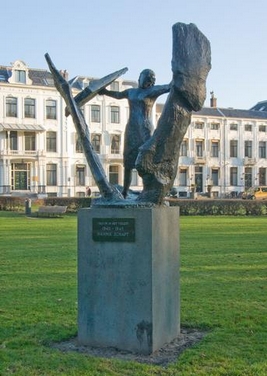
Hannie was transported to the sand dunes in Overveen and was shot at the age of just twenty four. She was buried in a shallow grave in the sand dunes. In 1945 Hannie was honoured with a state funeral attended by Queen Wilhelmina, and a monument was erected in 1982 in Kenau Park, Haarlem, to honour Hannie's memory.